Street Food in Vietnam: 31 Tasty Vietnamese Snacks and Drinks to Try
Disclosure: This article contains affiliate links, meaning when you make a purchase, I earn a small commission. Affiliate links cost you nothing to use, and help keep my content free. It’s a win-win! For more information see the Disclosure Policy.
The street sets the stage for much of the food in Vietnam; makeshift stalls, roving food vendors, and tiny ‘restaurants’ tucked into alleys are where you will find some of the tastiest bites.
My first introduction to the street food scene was on a food tour of the Old Quarter on my very first visit to Hanoi way back in 2015. From that food tour, I spent the rest of my time in Vietnam tasting everything I could get my hands on. By far, it was one of the best food-centered vacations I had ever been on.
Fast forward nine years, seven of them living in Hanoi, and eating Vietnamese snacks from the streets is still some of my favorite things to do.
Street food in Vietnam is not typically a huge feast, but small bites easily shared and eaten on the go. This makes the food here perfect for grazing. Which is great if you are anything like me, and have a hard time picking just one thing to eat.
There are so many incredible lists for eating in Vietnam. So to switch things up a bit, this is your Vietnamese Snacks: Street Food Edition.
Foods you can pick up and eat on the go, foods that are perfect for satisfying that midday hunger, and foods that will make you love Vietnamese cuisine even more.
There are certain snacks you might find in certain regions. But it is possible to find all of them all over the country, you just might have to dig a little bit harder. Some of the best places to try out a whole bunch of different Vietnamese snacks at once is at a local night market.
I have organized these popular Vietnamese snacks into a list separated by the regions of Vietnam they are typically found in:
Northern Vietnam Street Snacks
These snacks are from cities like Hanoi, Ninh Binh, Sapa, Ha Giang. Pretty much anywhere from Hanoi up to the Chinese border.
These Vietnamese dishes come from the space between HCMC and Hanoi from cities like Da Nang, Hue, and the central highlands of Da Lat.
Southern Vietnam Street Snacks
These foods come from the Mekong Delta, and cities like Ho Chi Minh City, Nha Trang and Phu Quoc.
Drinks found all over the country that are worth grabbing and sipping as you explore.
However, most of these snacks can be found anywhere in the country. You will see that I have Banh Mi on the Southern Street Snack list because they originated in the south. They are a food you will find anywhere though!
What is so awesome about food is that it is subjective. I can tell you that these are the absolute best snacks in Vietnamese cuisine, but you might disagree. There are also so many variations of all of these foods up and down the entire country, it would be impossible to create a list with every type of Vietnamese food snack.
A few notes:
Banh = cake, pastries, bread, pie
ran = fried
Northern Vietnamese Street Snacks
A Crispy Delight: Quay aka Fried Bread Sticks

Quay, or deep-fried dough sticks, are a tasty Vietnamese snack that has successfully journeyed from Chinese to Vietnamese cuisine. They are called quay but can also be called Chao Quay in the south, and Bahn Quay in the north.
Coming from China, where they’re known as ‘youtiao’ (literally ‘oil sticks’), these delicious bites typically grace breakfast tables alongside soy milk or congee.
Now, Vietnamese eat these fried sticks mostly by dunking them into a bowl of pho. You should definitely ask for a couple if you’re sitting down for a bowl of pho, or grab a couple as you’re strolling past a pho shop and eat as you go!
Crispy Crunch: Com Chay aka Burned Rice
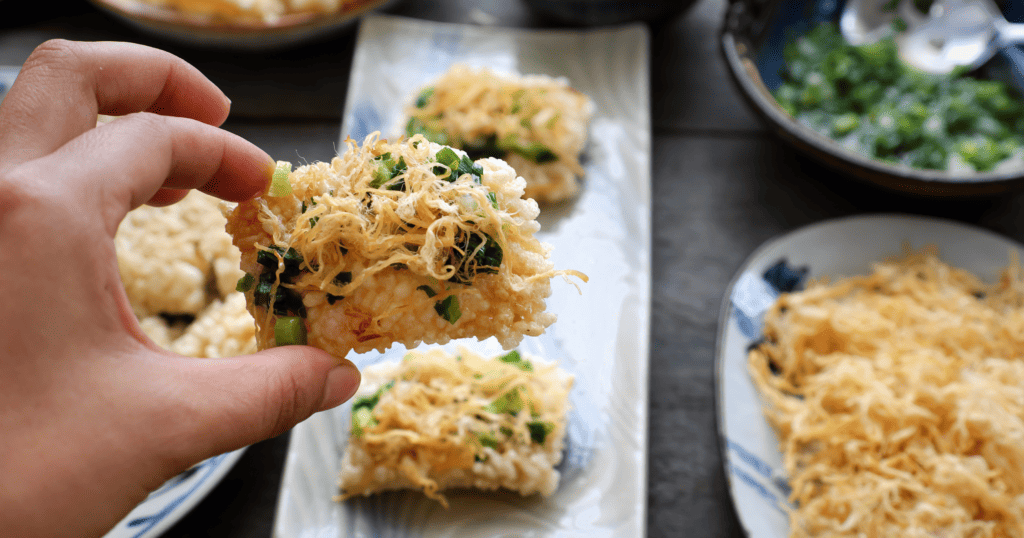
Com Chay, also known as Scorched or Burned Rice, doesn’t necessarily sound super appealing, but it is! You know when you have a layer of burnt rice at the bottom of a pan (just me?) that is essentially what this is – just better.
Originating from a time when resources were scarce, this dish is an example of how Vietnamese cuisine makes the most out of minimal ingredients.
Com Chay was traditionally the crispy rice at the bottom of the pot, but today it’s intentionally made for its unique texture and flavor. It is often seasoned with spices or topped with pork floss, giving it a nice blend of crunch and savoriness.
You can grab a bag for a quick snack or sit down to enjoy a plate at a local street food stall. Often bia hoi stalls will have com chay delivered to your table straight away.
Silky Smooth: Tao Pho aka Tofu Pudding

Tao Pho, also referred to as Tofu Pudding, is a Vietnamese dessert known for its silky taste. This street snack comes from China, where it’s called ‘douhua’, but has gained popularity in Vietnam. I can describe it most similarly to a flan-esque dessert.
It is made of silken tofu floating in a sweetened water or ginger syrup, and served either hot or cold. The mild, creamy tofu can get topped with things like coconut milk, fruit syrups, coconut flakes or crushed peanuts.
Spherical Delights: Banh Ran aka Fried Glutinous Rice Balls
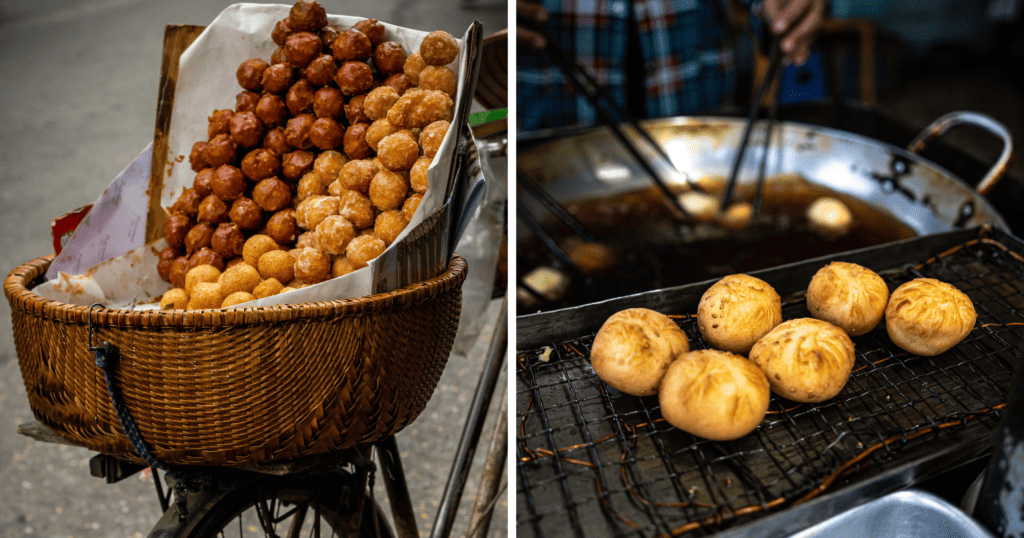
Banh Ran, also known as Fried Glutinous Rice Balls, are a popular treat in the Hanoi street food scene. The name literally translates to fried bread.
These deep fried balls are made from glutinous rice flour, and are typically filled with a sweet mung bean paste and coated with sesame seeds. The result is a balance of flavors and textures – the sweet and tender inside which contrasts nicely to the crunchy outer layer.
You will see ladies selling these on the streets of Hanoi walking around with big baskets of these treats. Give them a try!
A Treat from Northern Vietnam: Ban Hat De aka Sapa Chestnut Cake

Ban Hat De, also known as Sapa Chestnut Cake, is a popular dessert from the mountainous region of Northern Vietnam.
Made with the chestnuts grown in the Sapa region, this cake is definitely unique and shows how resourceful Vietnamese are when it comes to their dishes. Got a lot of chestnuts? Let’s make a cake!
The chestnuts are carefully boiled and ground into a fine paste, which is then sweetened with sugar and steamed to form a cake. The cake is then fried until it is golden brown and flaky.
A Crispy Snack from Hanoi: Banh Tom aka Sweet Potato and Shrimp Fritter
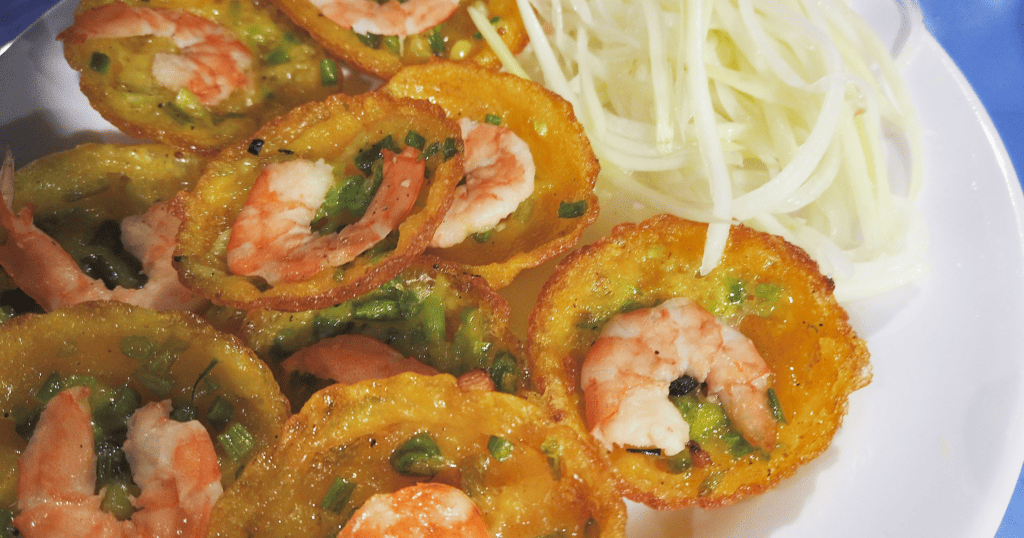
Banh Tom, or Sweet Potato and Shrimp Fritters, come from Northern Vietnam, particularly popular in Hanoi. In fact, if you head around the Temple in Tay Ho, there is an entire street filled with stacks and stacks of these shrimp fritters.
I remember when I first moved here, I was like “who is going to eat shrimp that is sitting outside all day?!”. But since living here, I have grown quite accustomed to these Vietnamese snacks.
This food melds the sweetness of sweet potatoes and the freshness of shrimp, in a crispy, golden batter, and deep-fried to perfection. The fritters are traditionally served with a tangy fish sauce and fresh herbs.
Crispy Vietnamese Street Food: Banh Goi aka Vietnamese Empanada
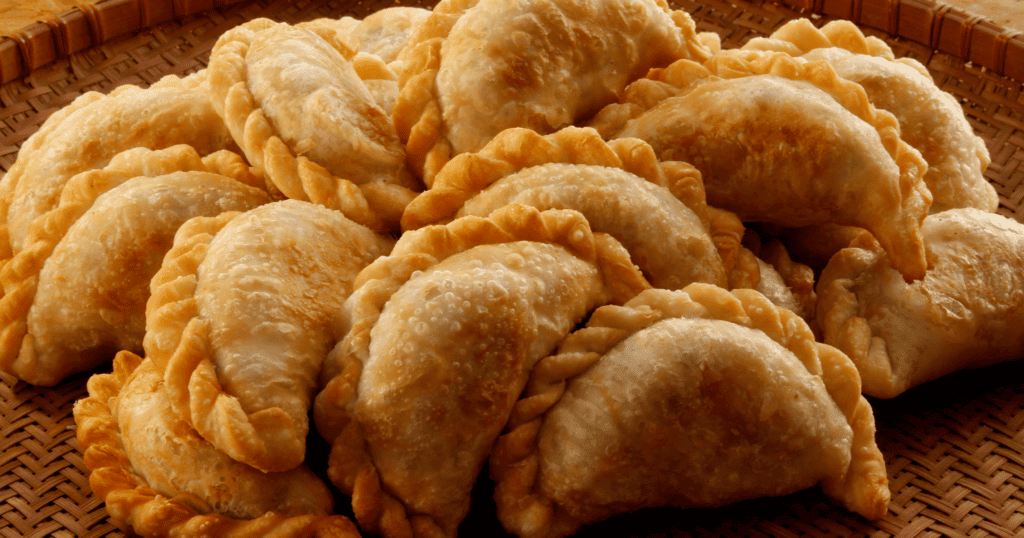
Banh Goi, often referred to as the “Vietnamese Empanada,” is a popular street food.
These pillow-shaped pastries are deep-fried to a crispy golden brown and filled with a mixture of minced pork, glass noodles, mushrooms, and finely diced vegetables.
These are perfect treats to eat on the go, as they are not too messy. You will find ladies all over the streets selling them.
A Sweet and Sour Treat : O Mai aka Candied Fruit
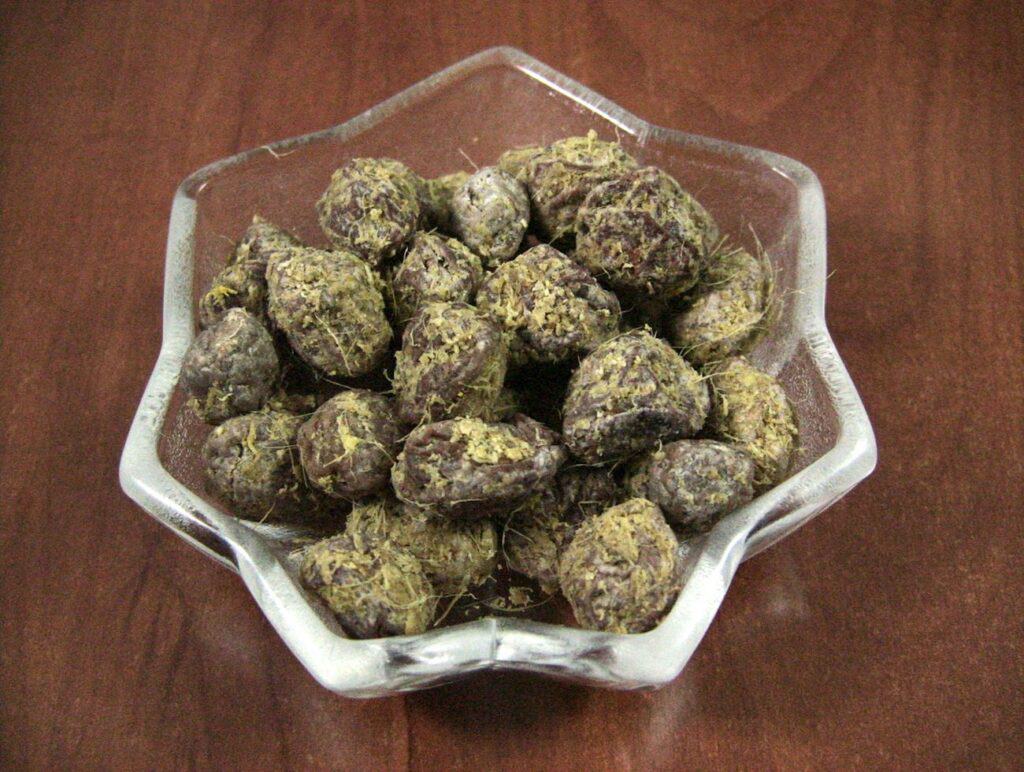
O Mai is a traditional Vietnamese treat that has been enjoyed for centuries. These candied fruits are usually made from apricots, plums, or kumquats that are marinated in a mixture of sugar, salt, and licorice then left to dry in the sun. The result is a sticky, chewy, sweet, and sour snack.
O Mai comes in a variety of flavors, ranging from extremely sour to sweet.
You can find piles of these in Vietnamese markets year round, but they are particularly important during Tet (Lunar New Year).
Fun Market Finds: Bo Kho aka Dried Beef
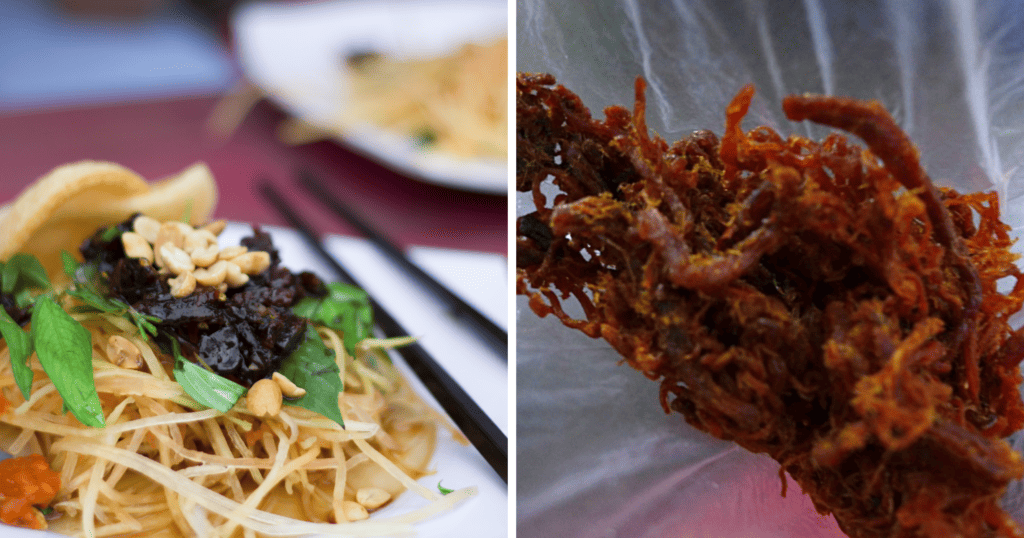
Bo Kho, or Vietnamese dried beef involves marinating beef in a mix of spices and herbs before it’s dried under the sun. The beef has just about every flavor profile you could want in a bite. It is sweet and tangy at the first taste, soft and chewy, then spicy as you chew more and swallow.
Traditionally eaten as a snack or accompaniment to cold beer, Bo Kho also serves as a handy travel food due to its long shelf life.
I first discovered this snack while taking a Cooking Class at Hanoi Cooking Center. We topped a mango salad with this dried beef, and I was hooked. The class leader took us to the market and pointed out where I could buy some of this beef (right next to the roasted dog).
One hundred grams cost 20,000 dong ($1) and I ate the entire bag before even walking off the aisle.
A Sweet Vietnamese Bite: Bo Bia Ngot aka Sweet Spring Roll

Bo Bia Ngot is a sweet spring roll and popular street food in Vietnam.
The dessert roll is packed with a combination of crisp shredded coconut, crunchy chunks of sugar cane, and soft, chewy black sesame seeds, all wrapped in a thin rice paper roll.
I used to see bo bia sellers line the street between Truch Bach and West Lake in Hanoi. It took me years to finally stop and try one. They have mini refrigerators on the backs of their bikes/motorcycles and custom make your bo bia.
They cost about 10,000 VND and are a sweet treat to grab and go. I literally stop when driving home sometimes, grab one and eat it while motorbiking away.
Central Vietnamese Street Snacks
A Sweet and Salty Fusion: Banh Trang Kep aka Rice Paper Pizza
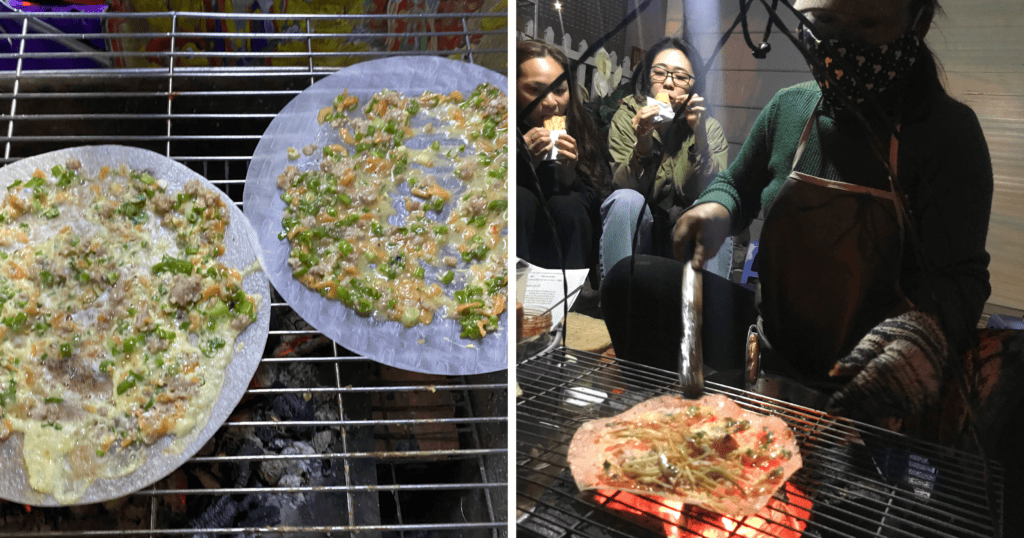
Banh Trang Kep, commonly known as Vietnamese Rice Paper Pizza, is a street food snack from Central Vietnam.
It’s a fusion of sweet, salty, and spicy flavors packed on a crispy rice paper. Typically the “pizza” is topped with snack ground pork, quail eggs, dried shrimp, and an assortment of vegetables.
The rice paper is then grilled over charcoal until it turns crispy, adding a smoky flavor to it all. It is then folded over and eaten hot.
Traditional Dumplings from Hue: Banh Nam aka Flat Steamed Rice Dumpling
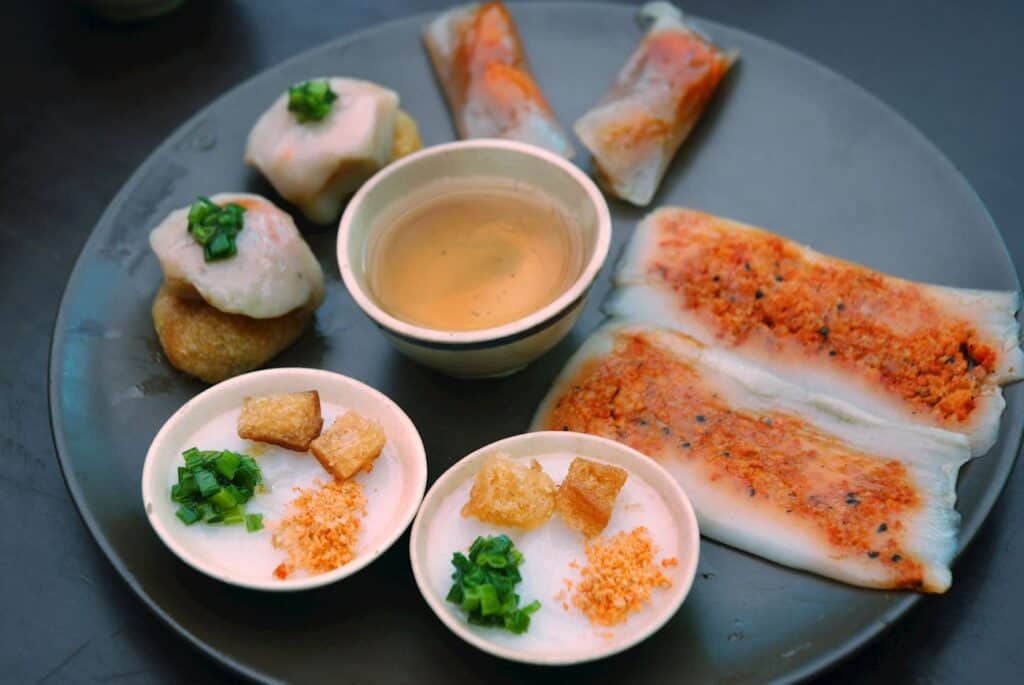
Banh Nam is another Vietnamese snack from Central Vietnam.
These flat steamed rice dumplings are a testament to the region’s love for rice-based dishes. A rice flour mixture, sprinkled with scallions, is spread onto a banana leaf before being topped with a filling typically composed of minced shrimp and pork. The banana leaf is then folded, letting the mixture steam on the inside.
Once steamed, the dumpling takes on a gelatinous texture. The banana leaf then acts as a carrying case when you buy it from street vendors. Don’t forget to put some fish sauce on the top!
Meat on a Stick: Nem Lui aka Lemongrass Skewers
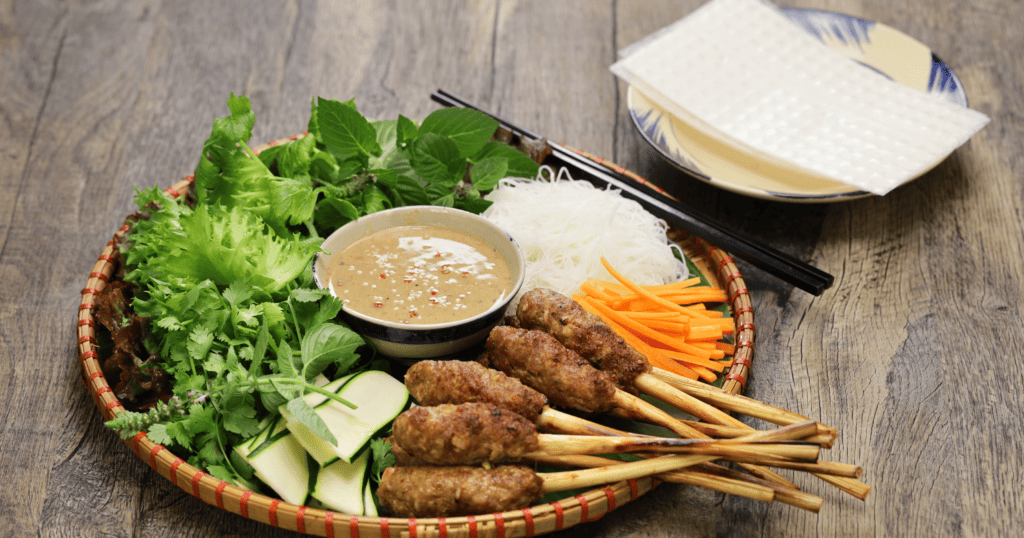
Nem Lui is a popular dish from Central Vietnam, specifically from the ancient city of Hue. Nem Lui is simply grilled pork skewers, but not just any skewers – the skewers are actually lemongrass stalks.
The minced pork is marinated with a blend of traditional Vietnamese spices, and once grilled, the lemongrass adds a citrusy flavor into the meat.
Nem Lui is often served with rice paper, fresh herbs, and a fermented soybean dipping sauce.
A Sweet Treat: Keo Cu Do aka Peanut Rice Paper Candy
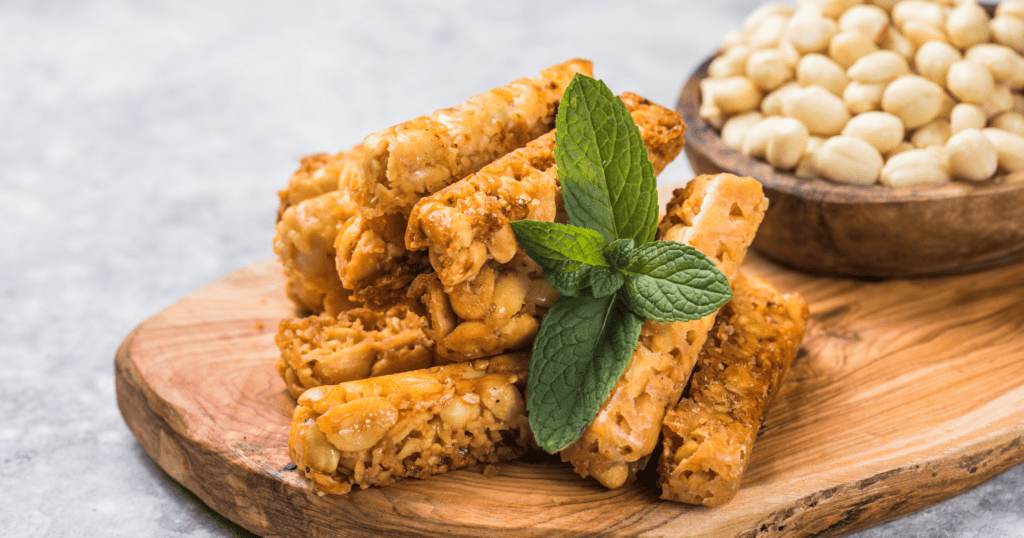
Keo Cu Do is a traditional Vietnamese candy from Central Vietnam. There is a fun story behind the meaning of this Vietnamese candy you can read here.
This classic sweet treat is made from cane molasses, peanut, malt powder, sesame, and ginger. There is a special technique to making this candy so that it has the perfect hard-yet-soft crunch for those eating it.
Grab it to go or sit down at a shop and eat some with some green tea.
Ban Can: A Taste of Da Lat’s Night Market

Ban Can is a street food dish from Da Lat. Ban Can is essentially a mini rice pancake cooked in small clay pots. They are topped with spring onions, shrimp, or ground pork.
The pancakes are made from rice flour batter in an outdoor grill/mold. It is quite interesting to watch the street vendors fill the molds with batter, then top them with the egg (and other toppings).
These are similar to Banh Khot from the South. The difference is that Ban Can stays soft and almost spongy, while the southern version is cooked until it is crispy.
A Crispy Delight: Banh Xeo aka Vietnamese Crepes
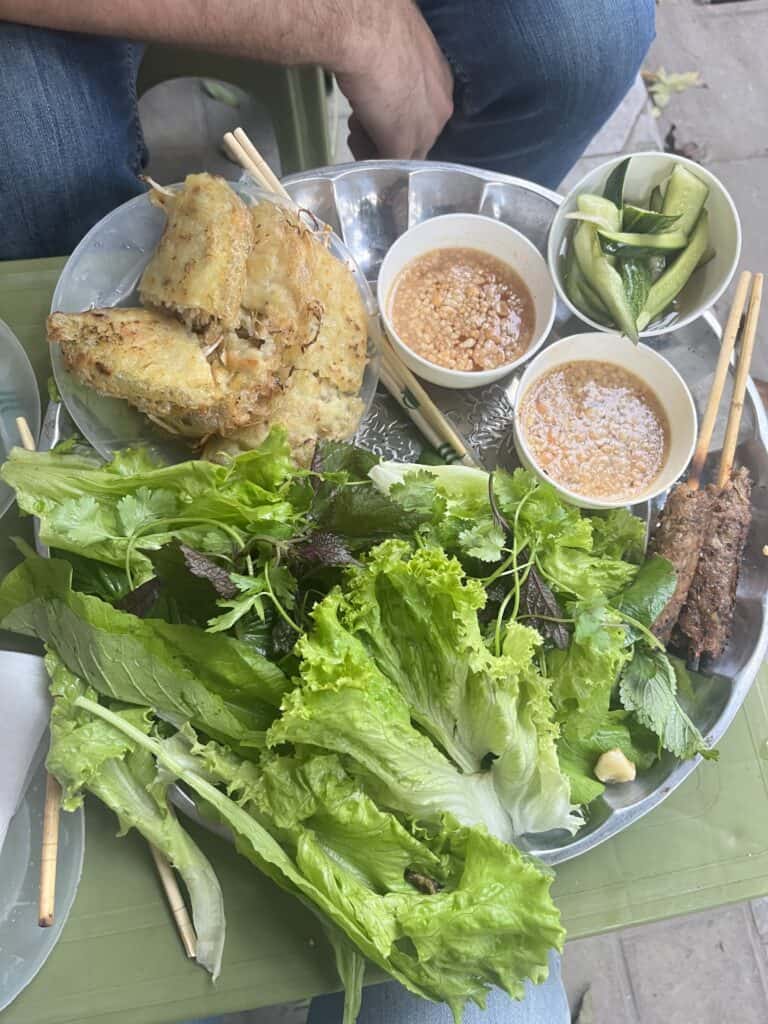
Banh Xeo is a savory Vietnamese crepe that is my number one favorite Vietnamese Snack to eat at a street food stall.
Rice Flour batter is fried on a sizzling pan then stuffed with pork, mushrooms, shrimp and veggies. The shell comes out light and crispy, and is served with lettuce to wrap the pancake in, tons of herbs, and dipped in fish sauce.
This is not food to eat on the go, as it is a DIY snack, but taking a quick break to devour this dish is necessary.
A Traditional Treat from Hue: Me Xung aka Sesame Candy
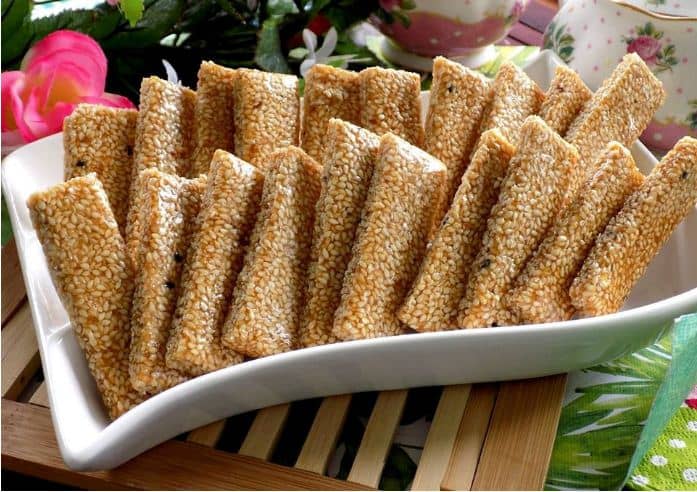
Me Xung is a popular Vietnamese sweet treat that comes from the central city of Hue.
It is made by boiling sugar with malt and honey to form a paste. Then peanuts and sesame seeds are added and the mixture is poured into a mold.
Each piece of Me Xung is individually wrapped in colorful paper, making a great treat to eat on the go, and bring back as a gift.
Southern Vietnamese Street Snacks
A Vietnamese Classic: Bahn Mi Aka Vietnamese Sandwich
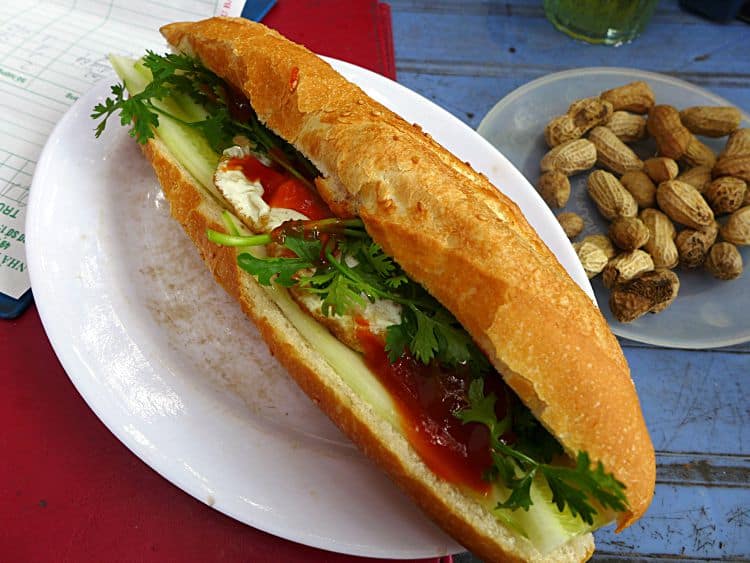
You might say that a sandwich is a bit more than a snack – but I’m including this classic Vietnamese street food on this list.
Banh Mi refers to a type of sandwich that is synonymous with Vietnamese cuisine worldwide. A banh mi is simply a sandwich. But done so well.
Firstly, it must be made with a baguette – crispy outside and soft inside. Then filled with a variety of marinated meats, such as grilled pork, pâté, and Vietnamese sausage. Veggies like cucumber, pickled carrots, daikon and cilantro. Eggs are also a popular banh mi addition. Add some mayonnaise, chili sauce and there you have it.
My number one favorite sandwich of all time that simply does not get old.
Crunchy Delight: Cha Gio/Nem Ran aka Vietnamese Spring Rolls

Cha Gio (as it is said in the South) or Nem Ran (as it is said in the north), are fried Vietnamese spring rolls.
The rolls are typically filled with minced pork, shrimp, glass noodles, mushrooms, and finely chopped vegetables such as carrots and onions. Everything is then carefully encased in rice paper and deep-fried to golden perfection.
The spring rolls are crunchy on the outside and juicy and savory on the inside. Traditionally, the spring rolls are served with a side of nuoc cham – a tangy, slightly sweet and spicy dipping sauce. You will typically get these as appetizers at a restaurant, but can also find them at street stalls around major cities.
A Crispy, Savory Snack: Banh Phong Tom aka Prawn Crackers

For someone who maybe has never been to Asia, shrimp crackers don’t exactly scream “Yes, I must eat that!”. But Banh Phong Tom is a popular snack and appetizer in Vietnamese cuisine, known for its crispy, yet light and airy, texture.
They’re made by mixing prawns, tapioca flour and water and rolled out into thin circles. They are then deep-fried until they balloon into light, crispy snacks that have a very subtle flavor of shrimp.
These will often come on the table at bia hoi joints or just buy a big clear bag of them whilst roaming the streets. Honestly, to me, they almost have no taste, and I just enjoy eating them for the texture.
A Miniature Flavor Bomb: Banh Khot aka Mini Pancakes
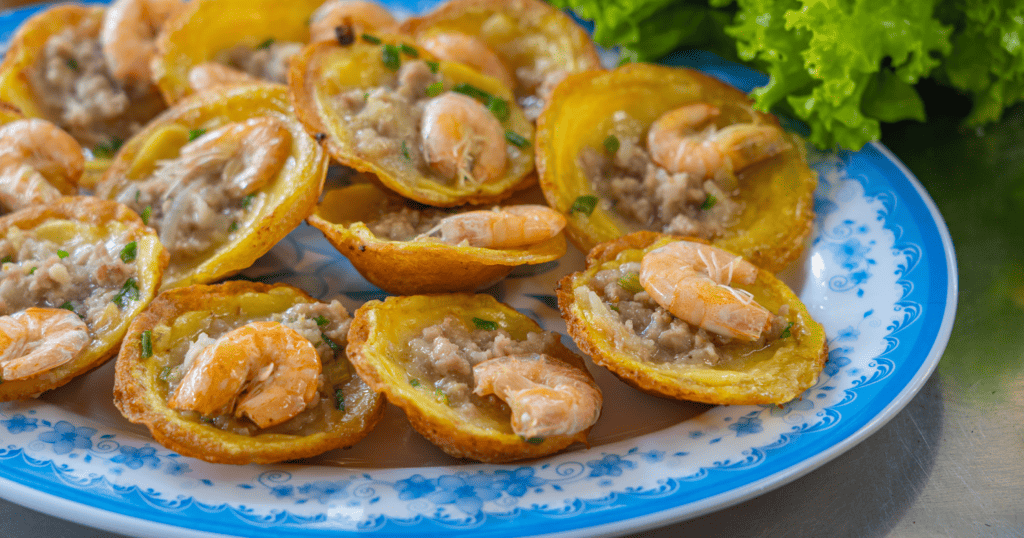
Banh Khot is basically a bite-sized pancake, somewhat similar to banh xeo, just in miniature form.
These miniature pancakes are made from a batter of rice flour, coconut milk, and turmeric, making them a yellow color.
The batter is spooned into special cast-iron molds and cooked until the pancakes are crispy around the edges but soft and fluffy in the center. Then a shrimp is put right on top.
If you sit down to eat these you will get a plate of greens to wrap them up in and a side of nuoc cham – tangy fish sauce.
A Grilled Delight: Nem Nuong aka Grilled Meatballs
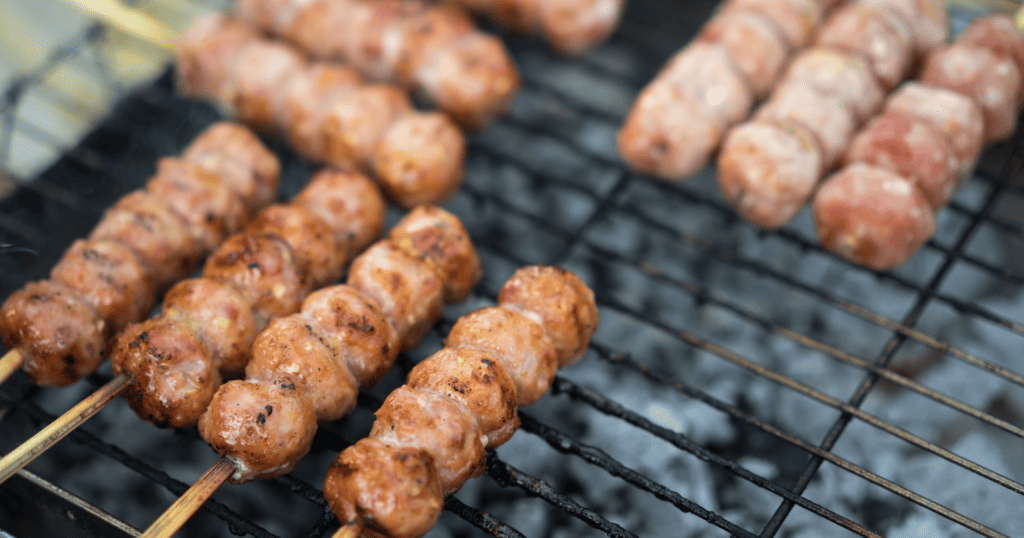
Nem Nuong, a grilled pork sausage, is a popular Vietnamese snack all over, but comes from the southern city of Nha Trang.
The sausage is made from finely minced pork, which is then mixed with garlic, sugar, and fish sauce. This mixture is formed into small patties or wrapped around bamboo skewers, then grilled over charcoal.
Typically, Nem Nuong is served with a side of fresh vegetables, herbs, and rice paper wrappers. You can also just get some to go as you are walking by a food stall!
A Fresh Snack: Goi Cuon/Nem Cuon aka Fresh Spring Rolls
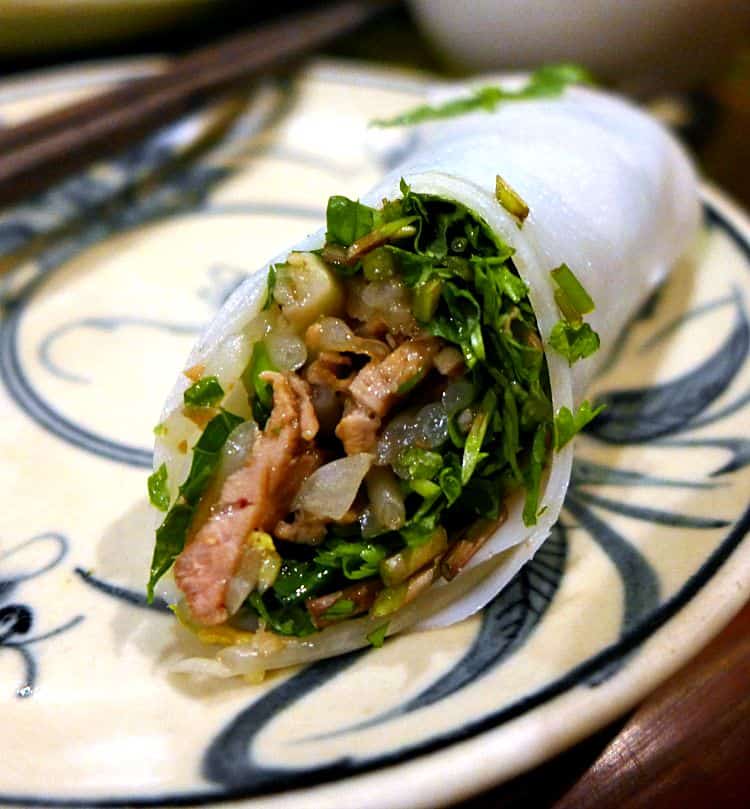
Goi Cuon(southern) or Nem Cuon (northern) are fresh Vietnamese spring rolls.You might see them on a menu written as spring rolls or salad roll or summer roll or rice paper roll. These are made similarly to nem ran, just eaten fresh instead of fried.
The rolls are filled with shrimp, pork, vermicelli noodles, and an assortment of fresh herbs. They are rolled up and dipped in a peanut or fish sauce.
Comfort Food: Banh Bao aka Vietnamese Bun
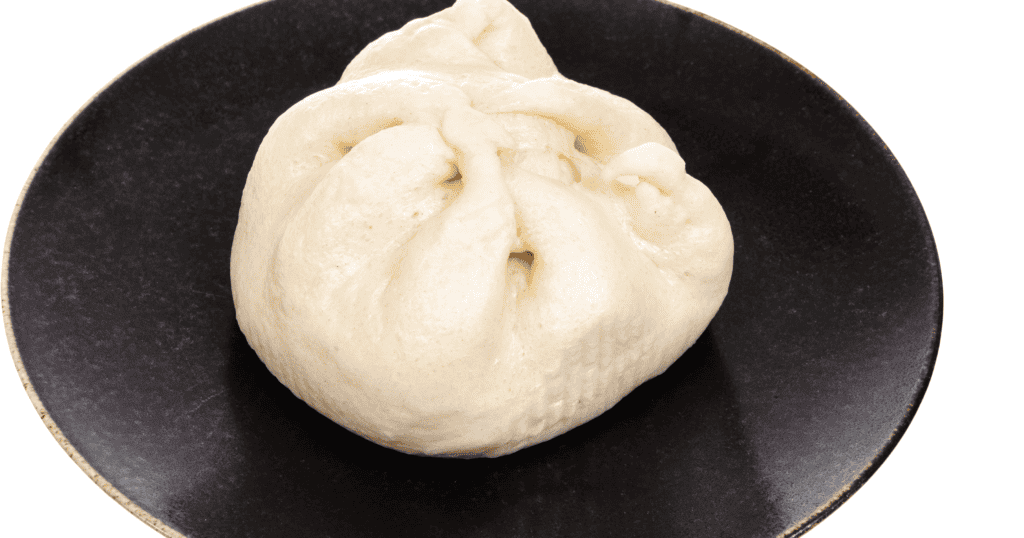
Banh Bao is a comfort food known for its soft, fluffy bao (bun) with a savory filling that often includes ground pork, onions, mushrooms, and a hard-boiled quail egg.
The dough, made from wheat flour, is steamed to achieve a light, pillowy texture.
People in Vietnam would probably consider this a full meal, and not just a snack, but it is super easy and versatile, so it can be whatever you want!
You’ll see a lot of Banh Bao sellers out in the mornings as people are headed to work. You can even buy these in convenient stores like Win Mart.
A Staple Vietnamese Snack: Xoi aka Sticky Rice

Xoi, aka sticky rice, is a staple in the Vietnamese diet. This dish is eaten in a variety of different ways; as a full meal, a snack, and dessert.
Kem Xoi is sweet, sticky rice topped with ice cream and coconut. Putting ice cream and rice may sound like a strange combination, but trust me, it works.
There are so many variations to eating xoi. Try it topped with crushed peanuts and fried shallots. Or the shredded chicken and pate. Or better off, get the xoi with all of it! Look for the ladies with huge baskets of rice to get your fix.
A Unique Vietnamese Treat: Thach Dua aka Jelly Coconut

J
Jelly coconut, also known as “thạch dừa”, is a popular treat in Vietnam, particularly in the southern regions, but can be found anywhere.
It is a dessert made inside a fresh coconut. The coconut water is mixed with agar-agar to create a soft, jelly-like texture, then put back into the coconut.
The combination of the natural sweetness from the coconut water with the cool, refreshing jelly texture makes this my favorite Vietnamese dessert.
I will often go for an evening stroll around West Lake and stop at any of the stalls around the lake to get a thach dua to go!
STREET DRINKS
A Staple Beverage with a Twist: Sua Dau Nanh aka Soy Bean Milk
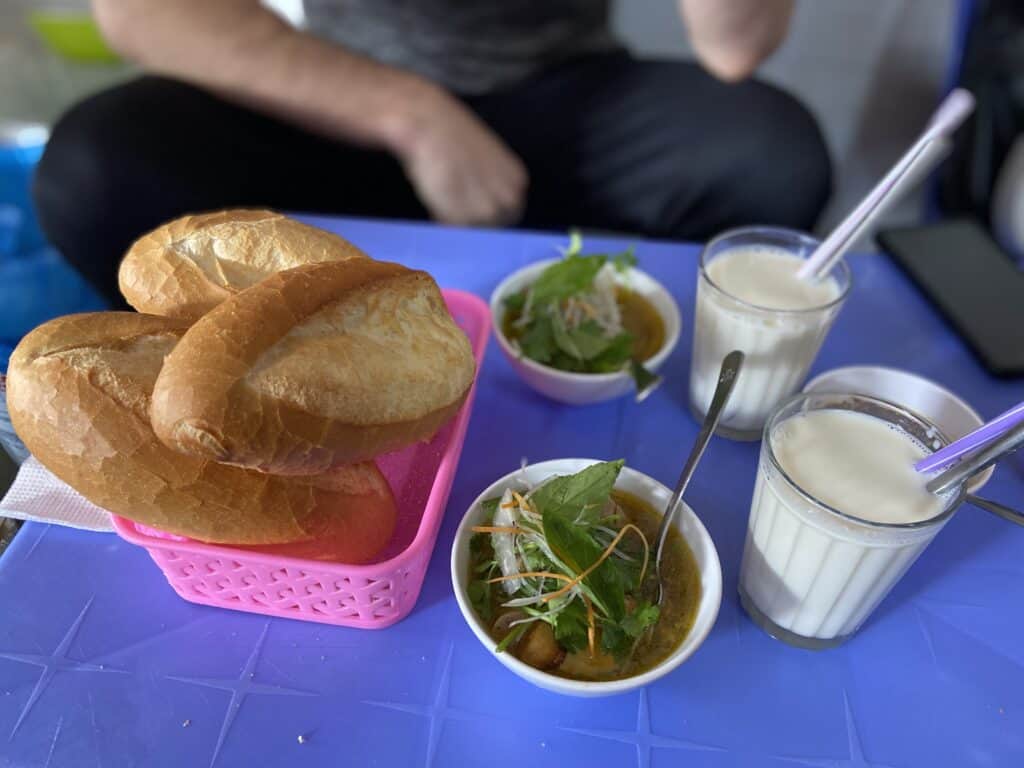
Soy Bean Milk, or ‘Sua Dau Nanh’, is a popular beverage in Vietnam, found mostly in the Central highlands of Dalat.
It is typically made from just two simple ingredients – soybeans and water, resulting in a sweet, creamy, and refreshing drink that can be enjoyed at any time of the day, hot or cold.
I have never been one to go for soy milk in my life, but something about drinking a glass of this while eating bahn mi xiu mai is quite refreshing.
A Sweet Staple: Nuoc Mia aka Sugarcane Juice
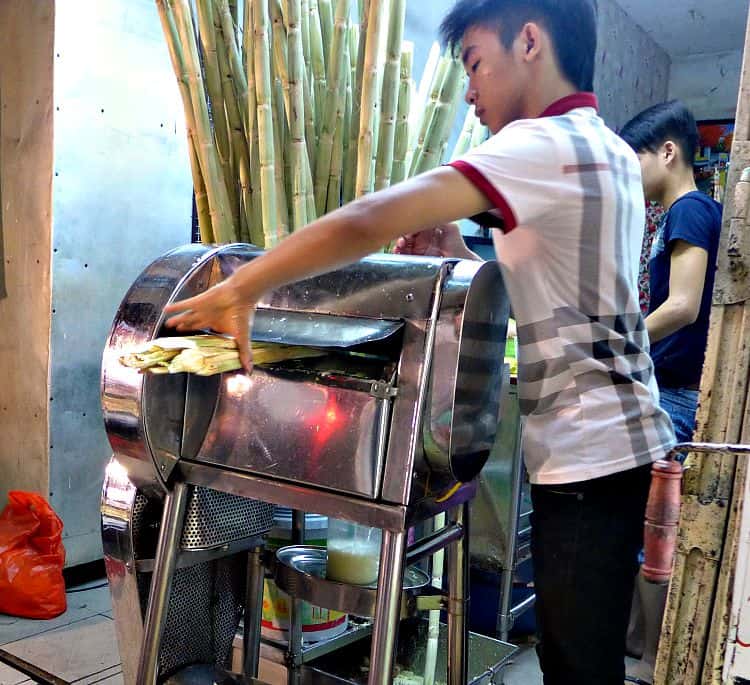
Drink this when you need a pick me up after a long day of walking the hot and busy streets of Vietnam.
Sugarcane juice, known as ‘Nuoc Mia’ in Vietnam, is fresh and sweet and made to order right in front you. Stalks of sugarcane and kumquats are sent through a juice press.
The juice is then poured over ice and ready to drink. It is my favorite thing to drink when I am dripping in sweat on a hot summer day in Vietnam.
Even better it’s not just a thirst-quencher, Sugarcane juice is also known for its health benefits, including hydration, digestion support, and a natural source of energy due to its high sugar content.
Bia Hoi: Vietnam’s Unique Beer Culture
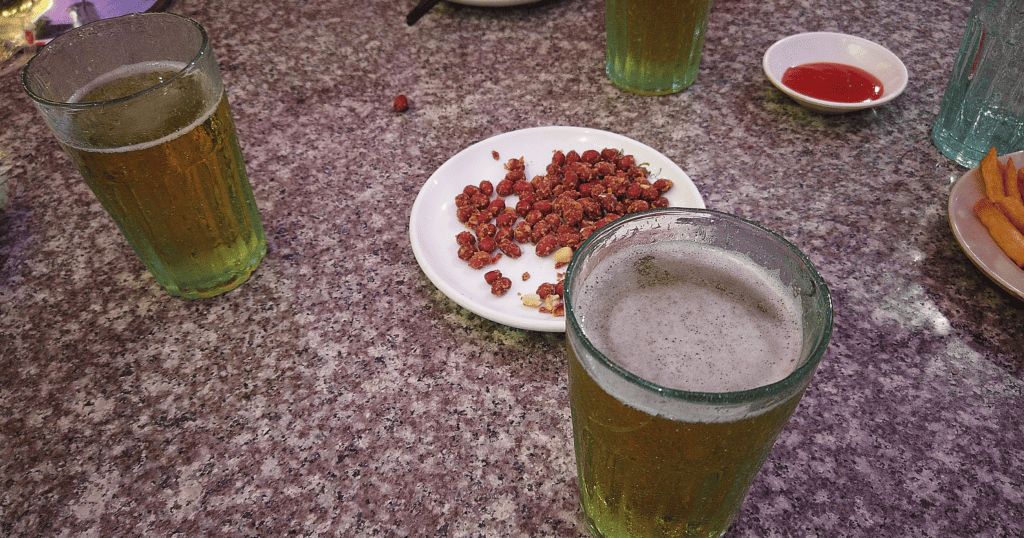
Bia Hoi, or ‘fresh beer’, is a very important part of Vietnam’s scene. This light, crisp lager is brewed daily and delivered to local bars and street-side establishments known as ‘Bia Hoi joints.’
Known for its low alcohol content and fresh taste, and is typically served in glass mugs at room temperature. Sitting down to take a break from exploring the streets and drinking a glass of bia hoi is a classic Vietnamese experience.
Bia Hoi is also a cultural phenomenon, locals and tourists alike gather to unwind, share stories, and enjoy this unique drink. You can also order many of these Vietnamese snacks at bia hoi joints! Check out Beer Street if you’re looking for a real Vietnamese experience.
The Perfect Refresher: Dua Tuoi aka Fresh Coconut Water

Nothing better than drinking fresh coconut water straight out of the coconut. Drinking this on a hot day in Vietnam is not only hydrating, but it also provides essential nutrients and electrolytes, making it a healthier alternative to sugary drinks.
And for an extra treat, the soft, tender coconut meat can be scooped out and eaten when you’re done with the water.
In this way, Vietnamese coconut water is more than just a drink; it’s a wholesome snack that quenches your thirst and fills you up!
Make sure you ask for it cold or with ice, otherwise it won’t be so refreshing. If you see them take the coconut from the ground and not from the fridge, stop them!
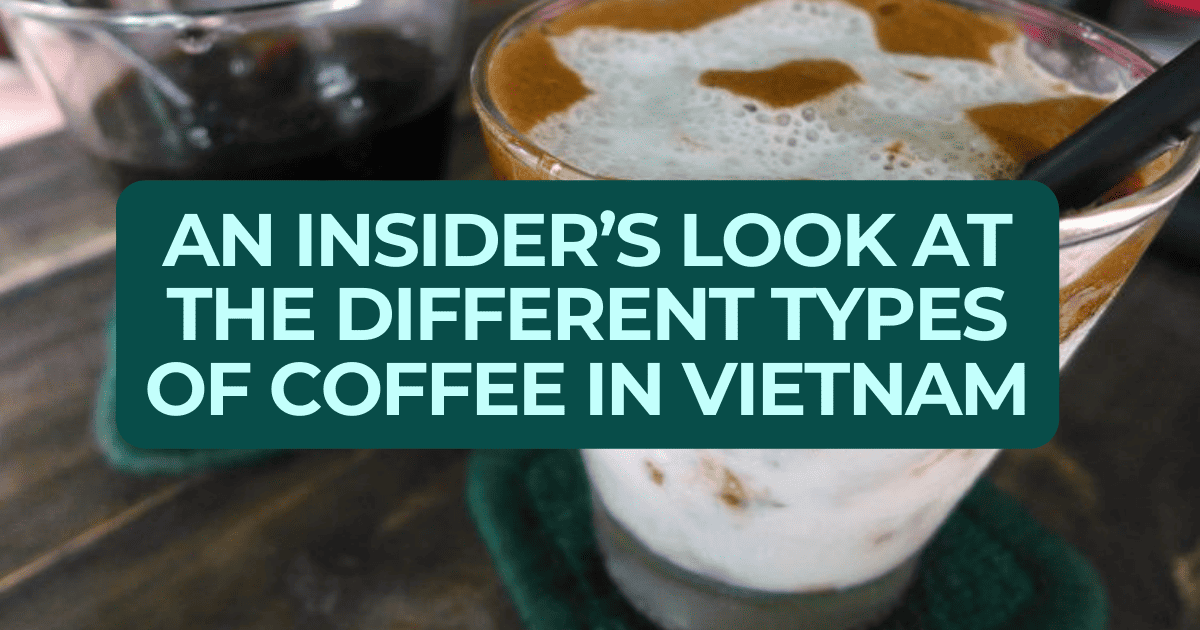
A Street Snack with a Kick: Ca Phe Sua Da aka Vietnamese Iced Coffee
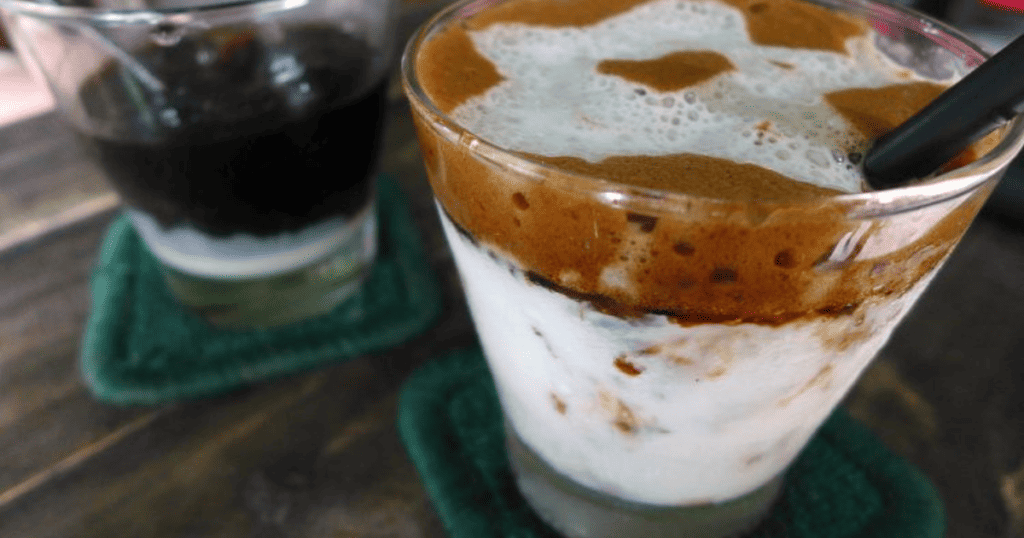
Vietnamese coffee deserves a post all on it’s own – there are so many ways and places to drink this extremely important part of the culture.
This strong, aromatic brew, served either hot or iced, is more than just a drink—it’s a snack in its own right.
Made from Robusta beans, Vietnamese coffee is known for its bold, robust flavor profile that is perfectly offset by the addition of sweetened condensed milk.
There are cafes around every corner and down every alley in every city in Vietnam. Whether enjoyed in the morning to kick-start the day or sipped slowly in the afternoon as a pick-me-up, sitting down, or getting a coffee to-go, is a must do when in Vietnam.
There are so many different ways to enjoy Vietnamese Coffee. Make sure you try out all of the different flavors and brewing methods.
To Wrap it All Up…
The best Vietnamese snacks offer a huge range of flavors, textures, and experiences. From those with a sweet tooth to those looking for something more savory, you’ll find it!
While the foods highlighted are meant to be snacks, most of the foods on this list you can find in Vietnamese restaurants, Vietnamese markets, and at stalls on the street.
Eating your way through Vietnam is one of the best ways to experience the culture! Plus, it’s simply so fun to sit (or stand) at a street side food stall and chow down!