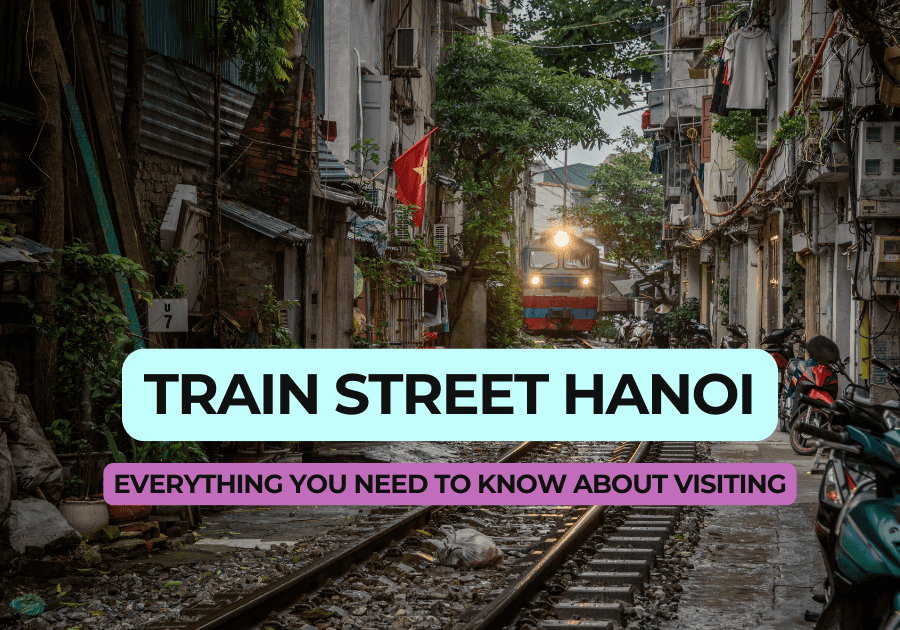
Train Street Hanoi: Everything You Need to Know About Visiting in 2025
Disclosure: This article contains affiliate links, meaning when you make a purchase, I earn a small commission. Affiliate links cost you nothing to use, and help keep my content free. It’s a win-win! For more information see the Disclosure Policy.
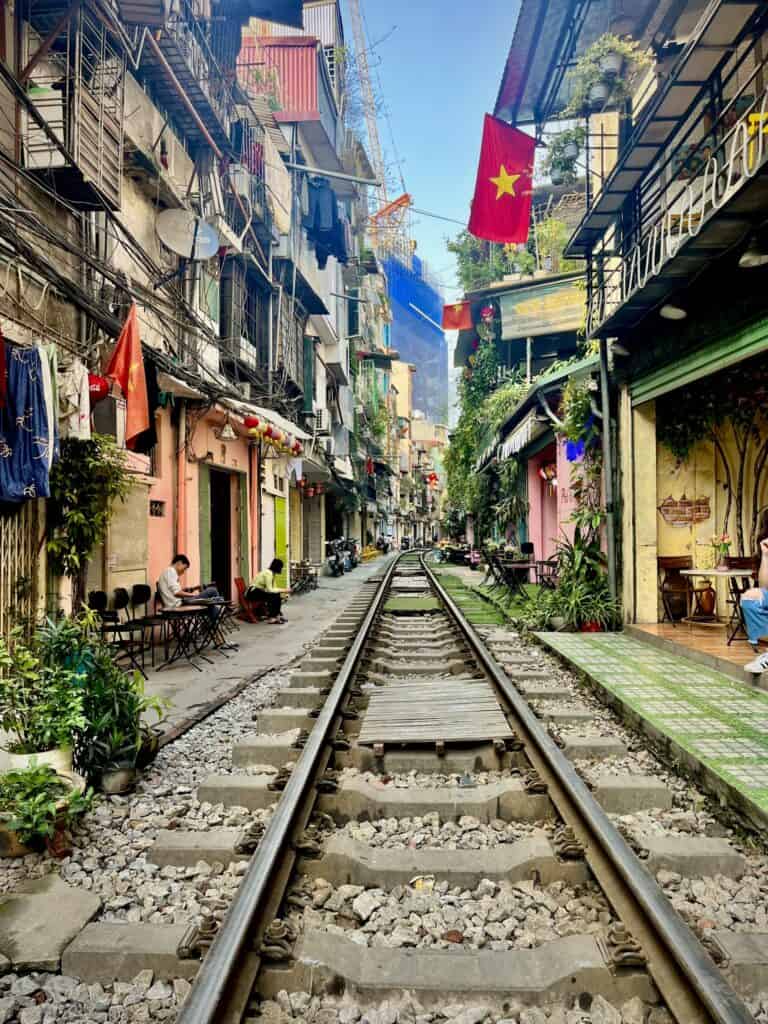
If you’ve spent even five minutes researching Hà Nội, you’ve probably stumbled across photos of that Train Street. You know what I’m referring to—narrow street lined with small shops and cafes, a train barreling through just inches from tables of iced coffee and tourists with their phones capturing the whole thing.
Sitting right near Hanoi’s Old Quarter, just a short walk from Hoan Kiem Lake, visiting train street is a really cool thing to do when you are traveling in Hanoi.
The number one question I see pop up in facebook groups and reddit threads is: Is Train Street Open?
The answer is – yes! It is open in 2025, though it is a bit more tightly run these days than it used to be. Thanks to concerns about visitors’ safety and recent government crackdowns, access is sometimes restricted, and there are rules to follow if you want to see it up close.
Still, it’s absolutely worth the effort to experience this place where the local community has built its living space around the passing train. Whether it’s your first or second time in Hà Nội, here’s exactly how you can visit Train Street, what to expect when you’re there, and how to make it a highlight of your trip.
How to Visit Train Street: All the Practical Info You Need
If you only read one section of this article, this is the one. Here are the answers to the very common questions surrounding train street Hanoi.
Where is Train Street Hanoi?
Train Street runs along the rail line that forms the western border of the Hoan Kiem Neighborhood. If you’re wondering how to get to train street, you can literally plug “Hanoi Train Street” into Google Maps—it’ll lead you to the Phung Hung Street section of the track. This is the section closest to the Old Quarter, and also more popular with tourists.
There is a second location, more south that you can visit for a little bit less of a crowded and quieter experience called the Le Duan section. It offers a more relaxed atmosphere and fewer crowds, but both sections are great spots to enjoy this unique attraction.
Train Street Locations:
- Phung Hung Section: The main entrance for the Phung Hung Section is at the intersection of Ly Nam De Street and Tran Phu. (Google Maps Location)
- Le Duan Section: This secondary entrance is off of Le Duan Street. You can plug Hanoi 1990s into Google Maps (Google Maps Location)
What Times do the Trains Pass Through?
Okay, there IS a set schedule for train street, but it is not necessarily accurate because the train timings can vary. For a full breakdown of the Hanoi train street times, I have an article with a downloadable PDF map of times and locations.
For the short version:
Trains pass through multiple times a day, but the most reliable schedule is mid-morning (around 10:30 AM) and late afternoon (about 3:30 PM). Arrive at least 30 minutes early to snag a good spot by the side of the track and grab a coffee.
**These are times from cafes as of December 2024. Honestly, these times are written, but I honestly think cafe owners just write whatever they want. There seems to always be trains coming through in the late afternoon (starting from 3pm-ish) and then again later in the evening from (7pm-ish).
| Phung Hung Section Train Times | Le Duan Section Train Times |
| 9:20am, 11:50am, 3:15pm, 5:40pm, 6:10pm, 7:05pm, 9:15pm | 11:40am, 3:30pm, 7:12pm, 7:20pm, 7:40pm, 8:55pm, 9:50pm |
Which Part of Train Street Should You Visit?
Train Street isn’t just one spot—it’s split into two main areas, each offering a slightly different vibe and experience. There is the Le Duan Section and the Phung Hung Section.
Le Duan Section: More Local, Less Crowded
The Le Duan section is a little less touristy and feels more like you’ve stumbled into a hidden corner of Hanoi. This area is closer to Tran Phu Street and Hanoi Train Station. The narrow alleyways here are lined with residential homes and a handful of cafes that offer a quieter, more authentic experience.
If you’re looking for a low-key spot to sit and sip a coffee, this is your go-to section. Keep in mind that the Le Duan area is less crowded than the Phung Hung section… but it is still crowded!
When I come here I always go to Hanoi 1990s Cafe.
Phung Hung Section: The Tourist Hotspot
If you’ve seen those Instagram-famous shots of Train Street, chances are they were taken in the Phung Hung section. This area is closer to the Old Quarter and has a livelier atmosphere with plenty of cafes vying for your attention.
The stretch is packed with tables, tiny stools, and visitors craning their necks to snap the perfect picture of the passing train.
This section has a really cool bend in the tracks for an awesome picture. It is also right next to Tong Duy Tan street, which is a fun street for eating street food and hitting up a bar.
Which Section Should You Choose?
If you want it to be a bit quieter, and more authentic, head to the Le Duan section. If you want the classic Train Street energy with tons of people the Phung Hung section is the place to be.
To be honest, I would check out both of them. I like the Phung Hung section at night and the Le Duan section during the day!
Is Hanoi Train Street Safe? Here’s What You Need to Know
You have probably seen posts and articles that train street is closed because of safety. Even as recently as July 2024, I had a friend visit and her hostel told her that train street was closed because of safety.
This is not true today, but it was true years ago. Supposedly, a tourist got in the way of a train and was seriously injured. The government came in and shut things down straight away.
So what does that mean for your safety in 2025?
Train Street is safe if you follow the rules and use common sense. It’s important to understand why safety is a concern in the first place.
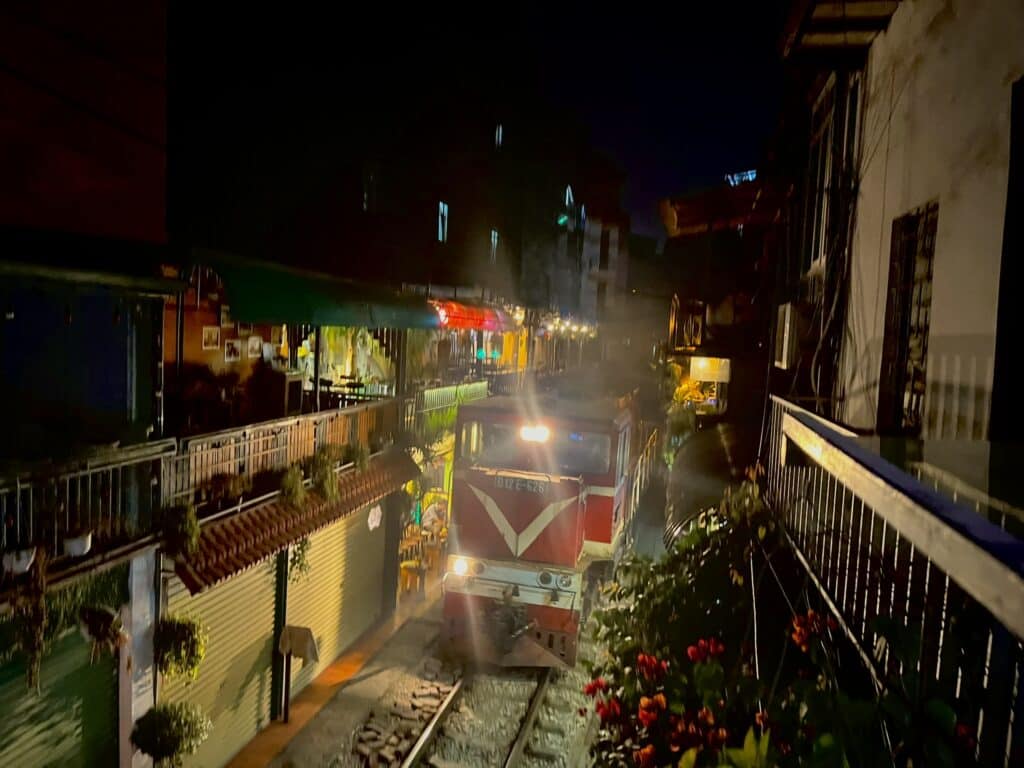
The train passes through narrow alleyways with only mere inches between the tracks and the buildings. This has led to strict regulations by local authorities to make sure visitors and residents are safe.
In recent years, parts of Train Street have been closed to the public due to overcrowding and safety violations, and designated walking paths and barriers have been implemented in some areas.
To stay safe, stick to the café areas that are authorized for visitors and never step beyond the marked safety line near the tracks. These lines exist for a reason—the train won’t stop for a selfie, no matter how great the shot might look on Instagram.
Listen to café owners and staff, who often know the train schedule better than anyone, and clear the track well before the train approaches.
The cafe owners WILL yell at you if you don’t listen. Really simple…Listen!
Bringing Kids to Hanoi Train Street: Safety Considerations
Just like anywhere that is slightly dangerous, visiting Hanoi Train Street with kids is fine, as long as you are paying attention to them!
Don’t be that person that doesn’t pay attention to their kid. Make sure they stay behind the marked safety lines and away from the tracks.
What Cafe Should I Go to to Visit Train Street?
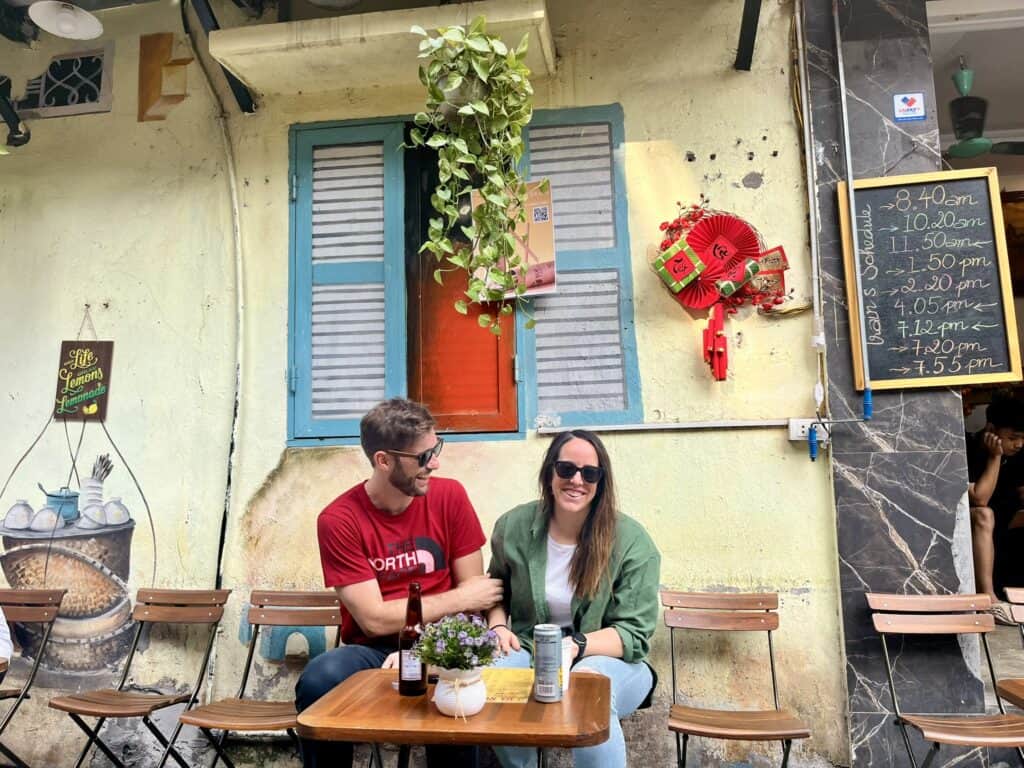
Hanoi’s Train Street is lined with cafés that offer front-row seats to the passing trains. Honestly, all of the cafes are pretty much the same in terms of what they serve. I can’t really recommend a “best cafe” as they are all fine! Here are the ones that I go to:
Hanoi 1990s Cafe
This is in the Le Duan section of train street. It is probably the most popular cafe in this section of the tracks. (Google Maps Location)
Railway Tuan Cafe
This is in the Phung Hung section. It is the first cafe right when you cross the barrier, and therefore the most popular. (Google Maps Location)
28 Train Street Cafe
Down a bit from Railway Tuan Cafe, sometimes it is less crowded because more people want to crowd around the cafes right on the bend of the track. (Google Maps Location)
What Is It Like to Experience Train Street?
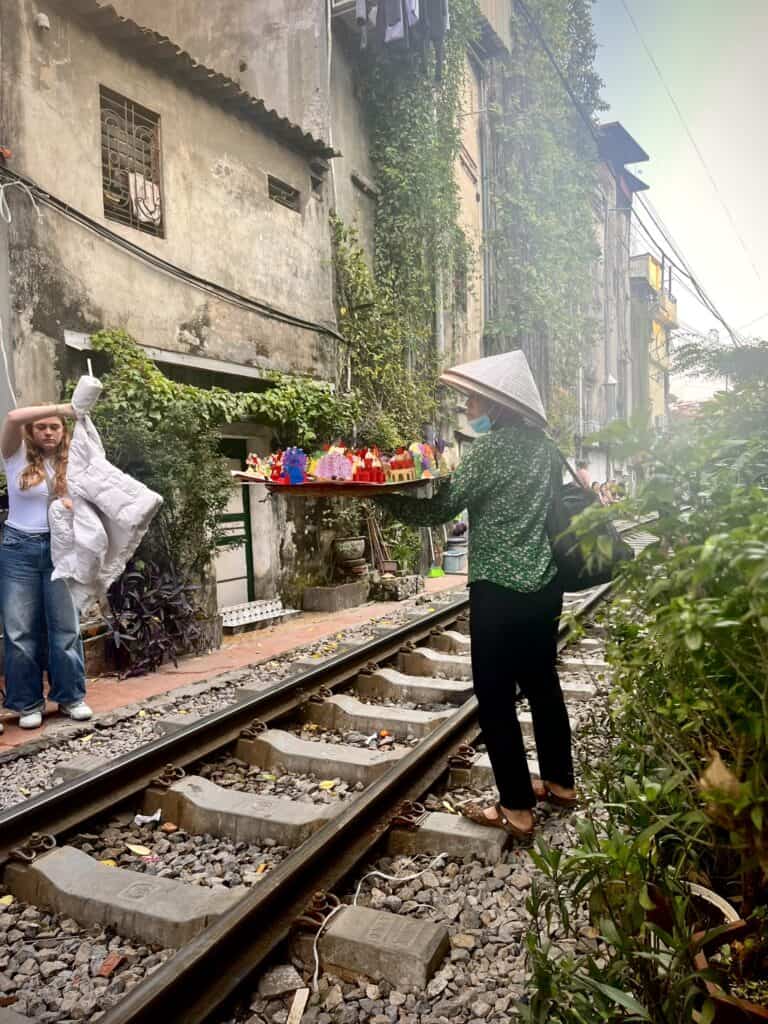
Walking along the railway tracks of Train Street is a very cool experience. Even after nearly 8 years of living in Hanoi, I still love going down to this part of Hanoi.
When you enter train street from any of the entrances you will likely be met by cafe owners or workers trying to pull you in. Some might even tell you that you can’t go onto Train Street without them—don’t worry, that’s not true.
You’re free to explore and choose any café you like. Take your time to stroll along the tracks, peeking into tiny shops and enjoying the atmosphere before deciding where to settle down.
When the train time gets close, the café owners kick into high gear. They’ll make sure you pay your bill before the action starts, then start clearing tables and chairs from the tracks.
When the train is near, the atmosphere shifts. Café owners get loud and stern, making sure everyone stays back. As the train barrels through, you feel the power and closeness of it, just inches from where you’re sitting.
It’s exciting! And a little nerve wracking. Once the train has passed, the street returns to normal as if nothing happened.
The History of Hanoi’s Train Street
Train Street wasn’t always the tourist hotspot it is today. Originally, it was just a functional part of Hanoi’s railway system, built during the French colonial era to connect the city with other regions of Vietnam.
These old tracks still see daily use as trains rumble through, passing inches from the homes and businesses that line the narrow alleys. For decades, it was simply a part of daily life for locals living along the tracks.
In recent years, however, Train Street gained international attention, thanks largely to social media. I remember on my first visit to Hanoi in 2015, train street was not even close to the tourist attraction that is is today.
Now, photos and videos of trains thundering past tiny cafes and curious onlookers have gone viral. And I get it! It is really cool!
The allure of sipping coffee while a train passes within arm’s reach turned Train Street into one of Hanoi’s most iconic attractions.
Why Train Street Should Be on Your Hanoi Itinerary
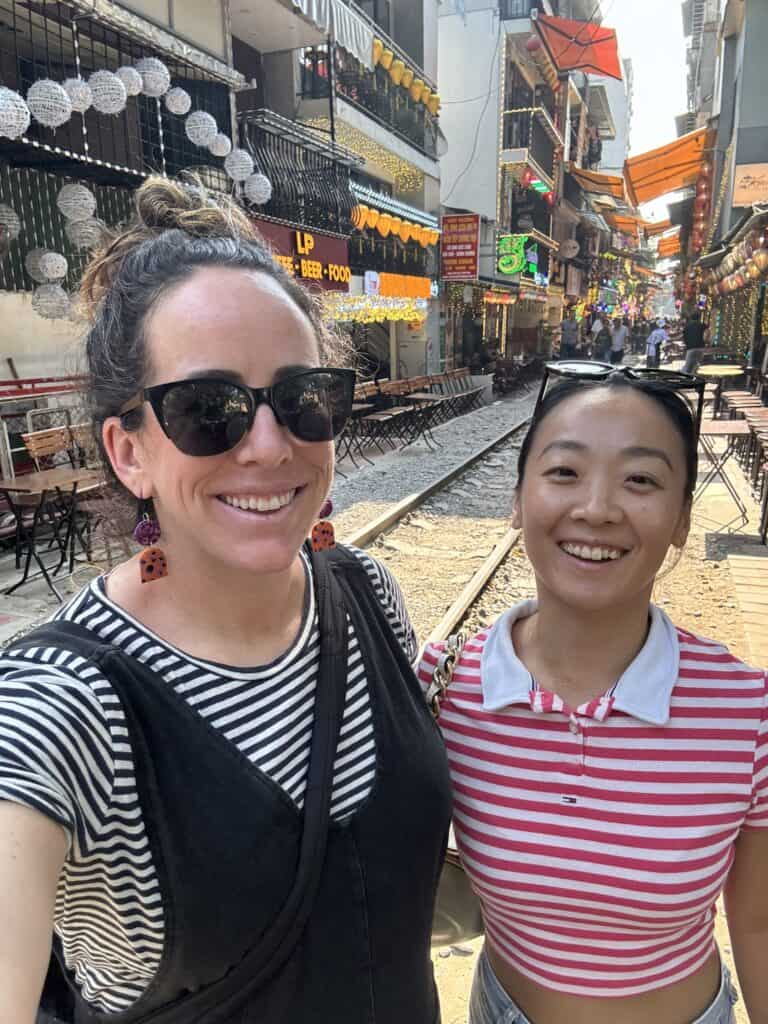
Hanoi’s Train Street is a spot for a cool photo, but also a chance to see a pretty unique part of Hanoi.
If you’re planning a trip to Hanoi, make sure to include Train Street. Yes, it is popular with tourists, but it is worth it.
Looking for more ways to make the most of your trip? Check out my Hanoi itineraries for tailored guides that include Train Street and all the other can’t-miss spots in this incredible city.
Related Posts

Best Vietnam Sim Card for Travelers in 2024
Is Hanoi Safe for Travelers? Things You Should Know!
7 Ideas for a Perfect 1 Week Vietnam Itinerary
Don’t Freak Out While Crossing the Street! (12 Tips on What NOT to Do in Vietnam)



From Eggs to Weasel Poop: Get an Insider’s Look at the Different Types of Coffee in Vietnam
38 Hanoi Tourist Attractions: An Honest Guide on What’s Worth Visiting (And What Isn’t)
Visiting Vietnam in June: Weather Info & Best Time to Go (2024)
Vietnam Food Guide: 15 of the Best Foods in Hanoi to Taste in 2024